
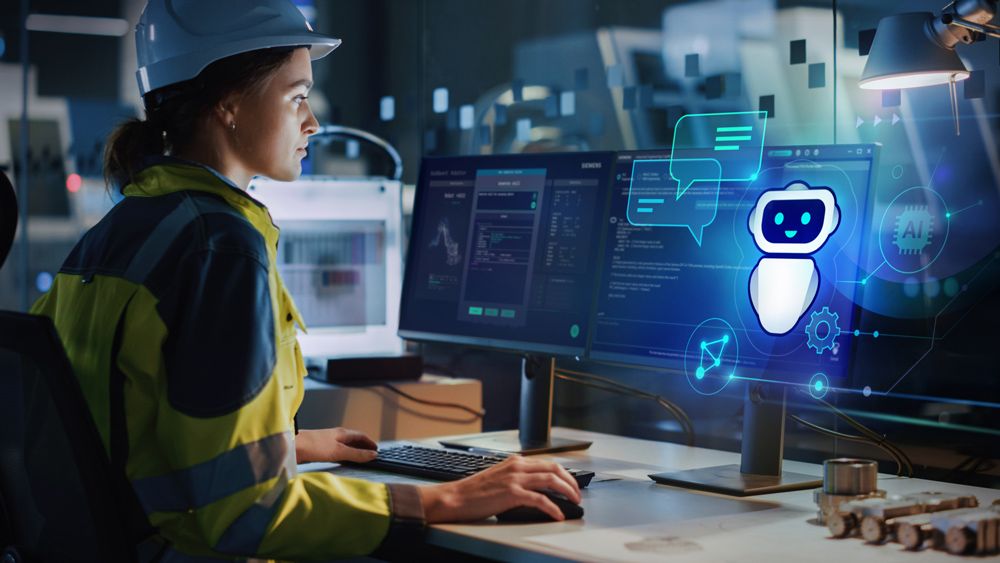
In the rapidly evolving world of manufacturing, companies are continually seeking ways to enhance production processes and stay competitive. Artificial Intelligence (AI) has emerged as a game-changing technology that offers unprecedented opportunities for innovation in production. Vertexia is at the forefront of integrating AI technologies into manufacturing, enabling businesses to achieve higher efficiency, precision, and flexibility. This article delves into how AI can significantly boost production innovation and the transformative impact it can have on manufacturing operations.
Enhancing Efficiency with AI
Efficiency is paramount in manufacturing, and AI technologies play a crucial role in optimizing operations. By incorporating AI-driven analytics and automation, manufacturers can streamline their production processes and eliminate bottlenecks. AI algorithms analyze vast amounts of data in real-time, providing actionable insights that help in making informed decisions quickly. Vertexia’s AI solutions empower manufacturers to identify inefficiencies, predict maintenance needs, and optimize workflows to achieve maximum productivity.
One of the primary benefits of AI in enhancing efficiency is predictive maintenance. Traditional maintenance schedules often lead to unnecessary downtime and increased costs. AI-driven predictive maintenance, on the other hand, uses machine learning algorithms to forecast equipment failures before they occur. This allows manufacturers to perform maintenance only when needed, reducing downtime and extending the lifespan of machinery. Vertexia’s predictive maintenance tools help companies save time and money while maintaining seamless production operations.
Improving Precision and Quality Control
Precision and quality control are critical in manufacturing, and AI technologies significantly contribute to ensuring high standards. AI-powered vision systems and quality control algorithms can detect defects and anomalies with greater accuracy than human inspectors. These systems use advanced image recognition and deep learning techniques to analyze product quality at various stages of the production line, ensuring consistent quality and reducing the likelihood of defective products reaching the market.
Vertexia’s AI-enabled quality control solutions offer real-time monitoring and feedback, enabling manufacturers to address issues promptly. This continuous improvement loop not only enhances product quality but also reduces the costs associated with rework and recalls. By integrating AI into quality control processes, manufacturers can achieve higher precision, improve customer satisfaction, and maintain a competitive edge in the market.
Key Benefits of AI in Manufacturing:
- Predictive maintenance for reduced downtime
- Real-time data analytics and process optimization
- Enhanced quality control and defect detection
- Improved operational efficiency and resource utilization
- Greater precision in production processes
Enabling Flexibility and Adaptability
The manufacturing industry is characterized by rapidly changing demands and market conditions. AI technologies provide the flexibility and adaptability needed to respond to these changes swiftly. AI-driven systems can reconfigure production lines, adjust workflows, and optimize resource allocation based on real-time data. This agility allows manufacturers to adapt to new product specifications, changing customer requirements, and fluctuating supply chain dynamics with ease.
Vertexia’s AI solutions enable manufacturers to implement flexible production strategies such as just-in-time manufacturing and mass customization. By leveraging AI, companies can reduce lead times, minimize inventory costs, and deliver products tailored to individual customer preferences. This level of adaptability not only enhances operational efficiency but also fosters innovation in product design and development.
Driving Innovation Through AI-Powered R&D
AI is a powerful tool for driving innovation in research and development (R&D). AI algorithms can analyze market trends, consumer preferences, and competitive products to identify opportunities for new product development. Additionally, AI-driven simulation and modeling tools enable manufacturers to test and validate new designs and processes virtually before implementing them on the production floor. This accelerates the innovation cycle and reduces the risks associated with experimentation.
NOTE:
Vertexia’s AI-powered R&D solutions help companies bring innovative products to market faster and more efficiently. By integrating AI into R&D processes, manufacturers can explore new materials, optimize product designs, and improve manufacturing techniques. The insights generated by AI enable data-driven decision-making, leading to more successful product launches and a stronger market presence.
Enhancing Collaboration and Knowledge Sharing
AI technologies facilitate collaboration and knowledge sharing across the manufacturing ecosystem. AI-driven platforms enable real-time communication and data exchange between different departments, suppliers, and partners. This enhances coordination, reduces silos, and fosters a collaborative environment where innovation can thrive. Vertexia’s AI-powered collaboration tools support seamless integration and data sharing, enabling manufacturers to leverage collective expertise and drive continuous improvement.
By using AI to streamline communication and collaboration, manufacturers can accelerate problem-solving and innovation. For instance, an AI-powered platform can automatically analyze and route relevant information to the right teams, ensuring that critical insights are promptly addressed. This level of connectivity enhances the efficiency and effectiveness of manufacturing operations, ultimately leading to greater innovation and success.
Conclusion
Integrating AI technologies into manufacturing has the potential to significantly boost production innovation. By enhancing efficiency, improving precision and quality control, enabling flexibility and adaptability, driving innovation through R&D, and fostering collaboration, AI empowers manufacturers to achieve remarkable advancements. Vertexia’s commitment to leveraging AI in manufacturing underscores our dedication to helping companies stay competitive and thrive in an ever-changing market. As AI continues to evolve, the possibilities for production innovation are limitless, promising a future of greater efficiency, quality, and adaptability in manufacturing.